US crude reserves fall to lows: the sign of a tense market
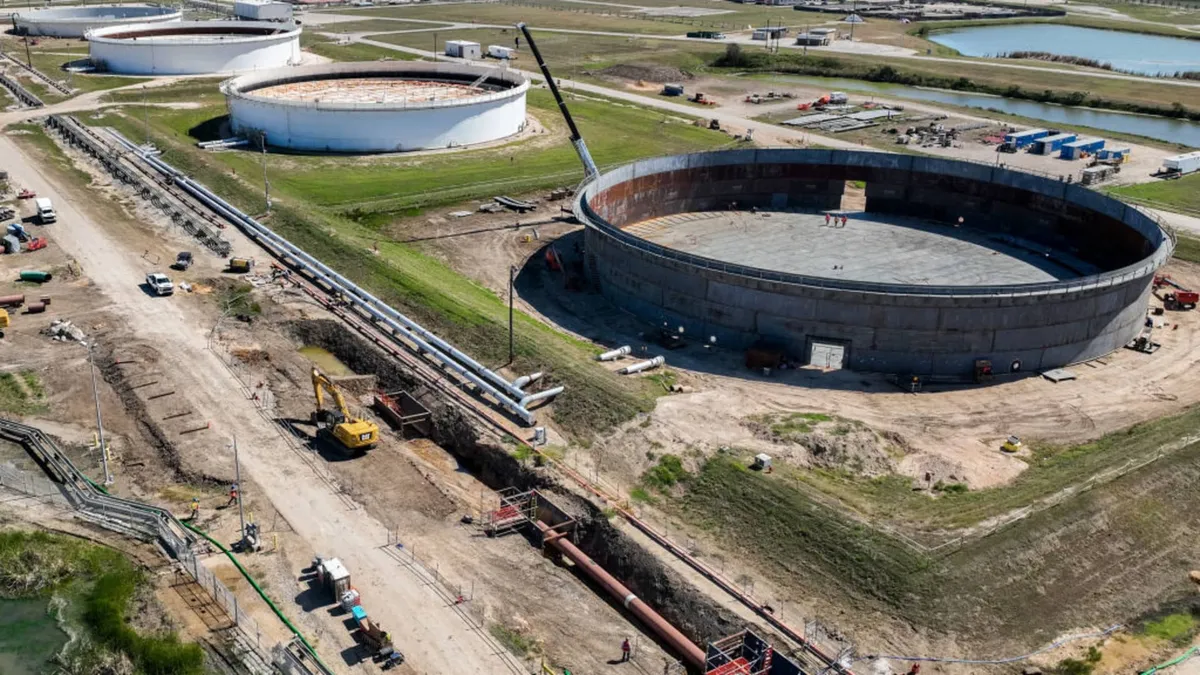 Foto: Getty Images (vía CNBC)
US oil reserves are at their lowest levels in decades: the Strategic Petroleum Reserve (SPR) fell below 300 million barrels, the lowest since 1983, and commercial crude inventories are at more than four-decade lows, according to the EIA weekly report cited by CNBC. It is the clearest sign of a market arriving tense at a supply crisis.
The reserve that ran out
The strategic reserve is the US emergency cushion, created after the 1973 oil embargo. Presidents have ordered massive releases in recent years to contain prices, and the result is that the stockpile —which once exceeded 700 million barrels in 2010— now hovers around 300 million, its worst level since the 1980s.
In parallel, commercial crude inventories hit more-than-40-year lows, according to the data CNBC cited this Tuesday when reporting the new jump in the barrel price.
Why it matters now
The world market depends on the US being able to draw on its reserves when something goes wrong. With the Strait of Hormuz blocked by the US-Iran conflict and no deal in sight, that reduced cushion means less room to maneuver if supply is truly interrupted.
The combination explains price behavior: WTI topped US$84 a barrel this Tuesday, after closing Monday with a 5% rise (US$82.13), according to EFE data. If the crisis drags on, Capital Economics analysts warn the market could reach a tipping point in the fourth quarter, with prices of US$120-140 a barrel.
The official data
The reference source is the EIA weekly report (US Energy Information Administration), which publishes the state of the country’s commercial and strategic reserves every Wednesday. It is the data markets follow and the one the media used to confirm the collapse in inventories.
The key figure: 300 million barrels. The threshold the US strategic reserve crossed downward, marking its lowest level in more than 40 years amid the Hormuz crisis.