Michael Kremer: evidence-based education policies in the DR
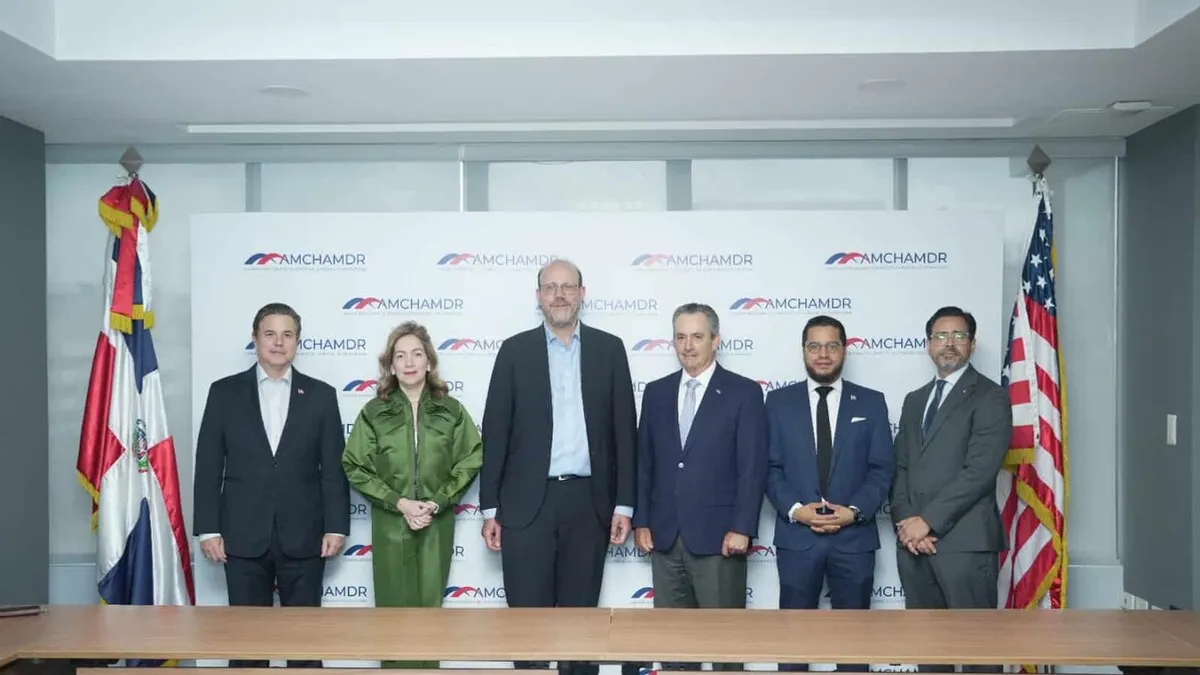 Foto: cedida por Amchamrd
An Economics Nobel laureate came to Santo Domingo to talk about something that is almost never on the agenda: measuring whether public policies actually work. Michael Kremer, 2019 Nobel, highlighted the Dominican Republic’s potential to develop and scale evidence-based policies, at a meeting organized by the American Chamber of Commerce (Amchamrd).
It was not a protocol visit. Kremer works in the country with a concrete goal: evaluating the impact of the Ministry of Education’s educational programs.
The Kremer method
The American economist is famous for using randomized experiments in the field to learn what works and what does not in education, health and development. His core idea: instead of arguing by ideology, test, measure and scale what works.
At the session, organized by Amchamrd’s Economy and Capital Markets Committee, Kremer shared experiences on designing and implementing data-driven policies and presented the progress of the research he develops in the country.
Why it matters for the DR
The Dominican Republic spends an important part of its budget every year on education, health and social programs. Kremer’s bet is that those investments — billions of pesos — stop being based on intuition and start being based on evidence: which program pays off, which does not, and what can be scaled.
His work with the Ministry of Education to evaluate educational quality improvement programs is exactly that: data at the service of public decision-making.
The key figure
2019, the year of Kremer’s Nobel. An idea worth more than the prize: in a country where every fiscal peso counts, knowing how to measure is knowing how to govern.