Financial education from childhood: what to teach and how
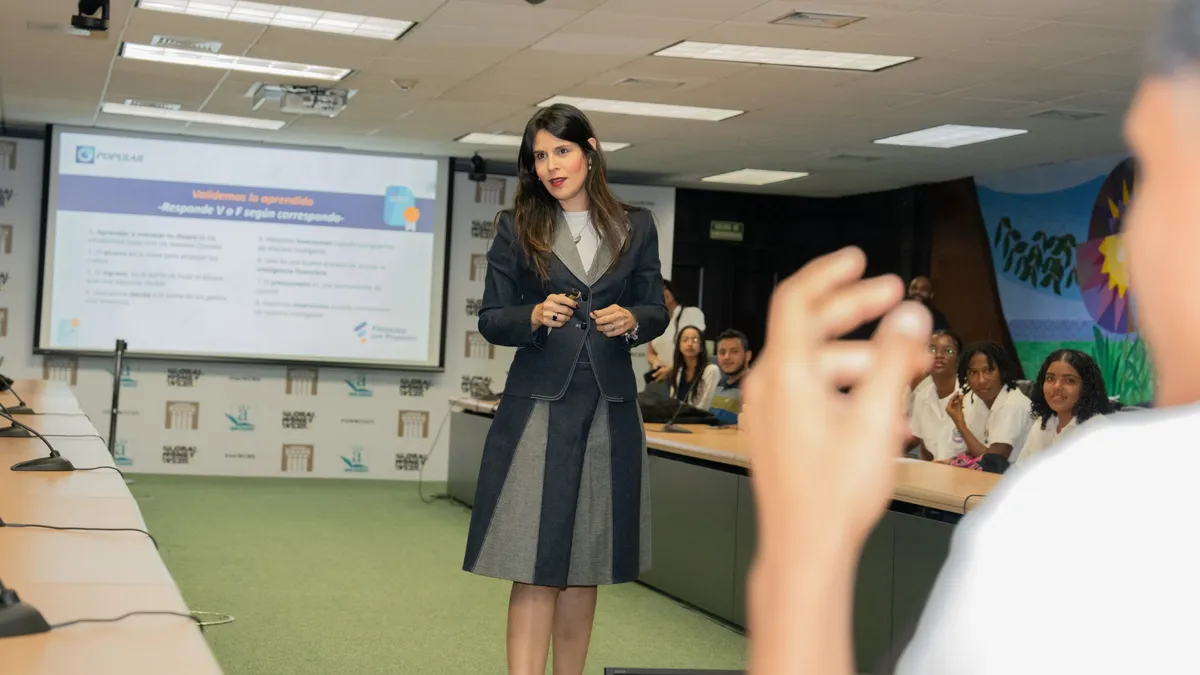 Imagen: elDinero
Economic and Financial Week 2026, a Central Bank initiative, offered financial education talks and workshops for children and youth in Santo Domingo, Santiago and Baní, within the framework of Global Money Week, promoted by the Child & Youth Finance International Foundation. Teaching children the value of money is a long-term investment, and the country has more and more spaces to do it.
What teenagers are taught
The talk “Finances with purpose,” aimed at young people aged 15 to 18, seeks to help them understand the value of money and learn to differentiate between basic needs and whims. It also invites them to talk with their parents about managing family money and to learn saving, spending and investing strategies at home. The goal: to make responsible financial decisions before handling their own salary.
How the youngest are reached
For children aged 9 to 11, the workshop “Saving is good for us” uses playful methodologies: games and activities that teach managing economic and natural resources prudently, building early awareness of personal finance. The dynamic is key: at that age, saving is better learned by playing than by listening to a lecture.
Why start early
Financial habits form in childhood and are reinforced in adolescence. A child who understands the difference between saving and spending reaches adulthood with more tools to avoid over-indebtedness and plan big goals, from college to housing. Banks and public institutions know this: that is why they multiply these programs every year.
The practical takeaway
Financial education is not only the job of schools or banks: it starts at the family table. Talking about the household budget, giving an allowance with clear rules and letting children make small decisions with their money are simple exercises that pay off decades later. Workshops help; daily practice decides.